
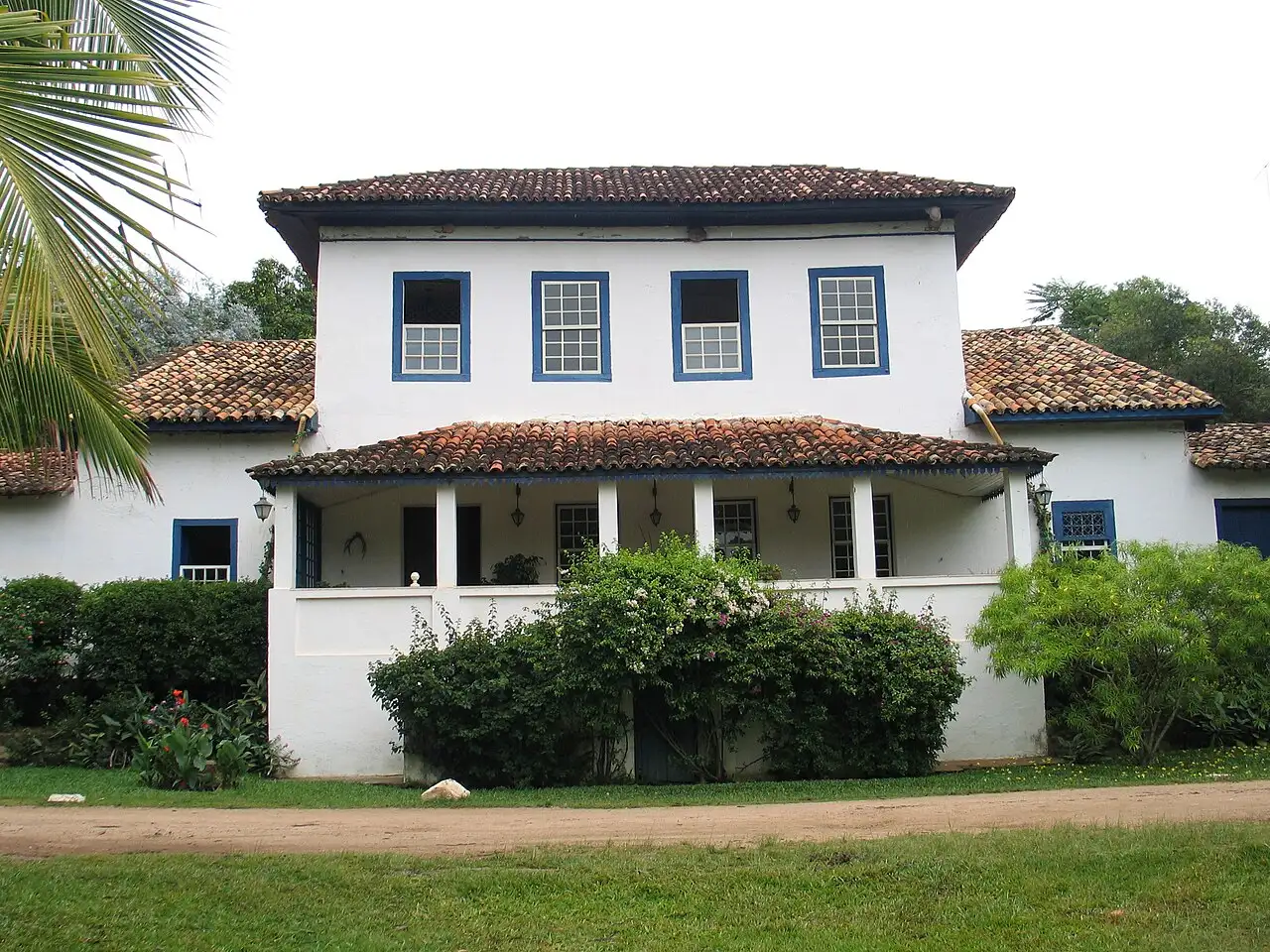

Buying a house or a lot in a country-estate community is different from buying an apartment in the city. The property is larger, the community rules carry more weight, construction can take years, and the cost of maintaining the house matters as much as the purchase price. This guide brings together the steps and precautions we recommend to anyone looking for property in Itu, Porto Feliz, Itupeva and the surrounding area.
1. Define how you will use it before choosing the community
The first question is how the house will be used. For full-time living, schools, healthcare and the daily commute matter most (see Schools, Healthcare and Getting there). For weekends, the club's amenities, ease of remote maintenance and the security of an empty house count more. If you are thinking of both phases, it is worth choosing a community that works well for a lifetime, not just for Saturdays.
2. Lot or move-in ready house
Lot. It lets you design the house from scratch and usually has a lower entry price. In November 2026, listings for lots of 1,000 to 1,566 m² at Fazenda Alvorada, in Porto Feliz, ranged from about R$ 499 thousand to R$ 1.6 million; at Fazenda Serrazul, in Itupeva, lots of 1,058 to 1,270 m² appeared between R$ 980 thousand and R$ 1.28 million. At the top of the market, the Boa Vista Estates phase, launched by JHSF in September 2026, has an average price of R$ 12 million per lot of 5,000 or 20,000 m².
The trade-off is time: approval of the plans by the association and the city, construction and finishing can take years, and the cost of high-end construction needs to be in the budget from the start.
Move-in ready house. It shortens the path and lets you see exactly what you are buying. In November 2026, listings for houses at Terras de São José ranged from about R$ 4.5 million to R$ 28 million, and at Fazenda Vila Real de Itu, from R$ 7.8 million to R$ 19 million. Older houses may need work on the roof, waterproofing, pool and electrical systems, which should be inspected by an engineer.
3. Understand the type of development
Not every gated community is the same in legal terms. Law No. 13.465 of 2017 recognized two structures: the lot condominium (condomínio de lotes), added to the Civil Code (art. 1,358-A), in which each lot is exclusive property and the common areas belong to the owners, with bylaws and a mandatory HOA fee; and the controlled-access subdivision (loteamento de acesso controlado), provided for in Law No. 6.766/1979, in which the streets and green areas are public, access is controlled under municipal rules and management is usually handled by a residents' association.
Many developments in the region are older and began as subdivisions with an association, which changes the nature of the fees, the usage rules and how decisions on common works are made. Ask which case applies and request the documents that prove it.
4. Documents and due diligence
- Updated title record (matrícula) from the real estate registry office, showing the chain of ownership, the area and the absence of liens.
- Seller's certificates (civil, tax and labor) and a certificate showing no outstanding IPTU (property tax) debts.
- Statement of payment of condominium or association fees.
- Bylaws, internal rules and construction regulations: these set setbacks, lot coverage, height, walls, pets, short-term rentals and deadlines.
- Occupancy permit (habite-se) and approved plans, in the case of a move-in ready house, checking that the built area matches the registered area.
- Environmental restrictions: preservation areas, springs and non-buildable strips within the lot.
5. Visit the lot, not just the club
Visit on different days and at different times. Look at the topography, since very steep lots make construction more expensive; the sun exposure; the view and what can be built on the neighboring lot; the distance to the gatehouse and the club; and highway noise, where applicable. Ask where the water comes from, what the electrical grid is like and whether there is fiber-optic internet on that stretch.
6. Calculate the upkeep cost
| Item | What to consider |
|---|---|
| Condominium or association fee | Varies with the scale of the amenities; in one Alphaville Nova Esplanada listing, R$ 840 per month in November 2026 |
| IPTU | In the same listing, R$ 480 per month |
| Club | In some communities, the membership and monthly dues are separate |
| House and grounds | Landscaping, pool, cleaning, electronic security |
| Purchase taxes | Municipal ITBI (transfer tax), deed and registration |
7. Negotiate with information
Compare the price per square meter of the land and the construction with similar properties in the same community, not with the city average. Established communities, with almost all lots occupied, tend to have less supply and firmer prices; new developments may offer payment terms, but require attention to the construction schedule and the developer's financial health.
8. Think about resale
Liquidity matters. Well-located properties within the community, with timeless design and documents in order, sell faster. Highly customized houses, or ones oversized for the community, may take longer to find a buyer.
To understand the routine before deciding, read What it is like to live in a country-estate community. At Grando Soluções Imobiliárias, we serve the region with local partners and brokers who specialize in each community, from the first screening to the deed.
More in Real Estate Market
Sources consulted (7)
- L. Martinelli — Condomínio Fazenda Alvorada (lmartinelli.com.br)
- Guilherme Girardi — lot at Fazenda Serrazul (guilhermegirardi.com.br)
- L. Martinelli — Condomínio Terras de São José I (lmartinelli.com.br)
- Imóveis Vila Real de Itu — listings in the community (imoveisvilarealdeitu.com.br)
- Mercado & Consumo — JHSF launches new phase in Porto Feliz (22/09/2026) (mercadoeconsumo.com.br)
- Lot listing at Alphaville Nova Esplanada (imobiliariaemaximovel.com.br)
- Planalto — Law No. 13.465 of July 11, 2017 (planalto.gov.br)
Information verified on 01/11/2026. Found something outdated? Let our team know.