
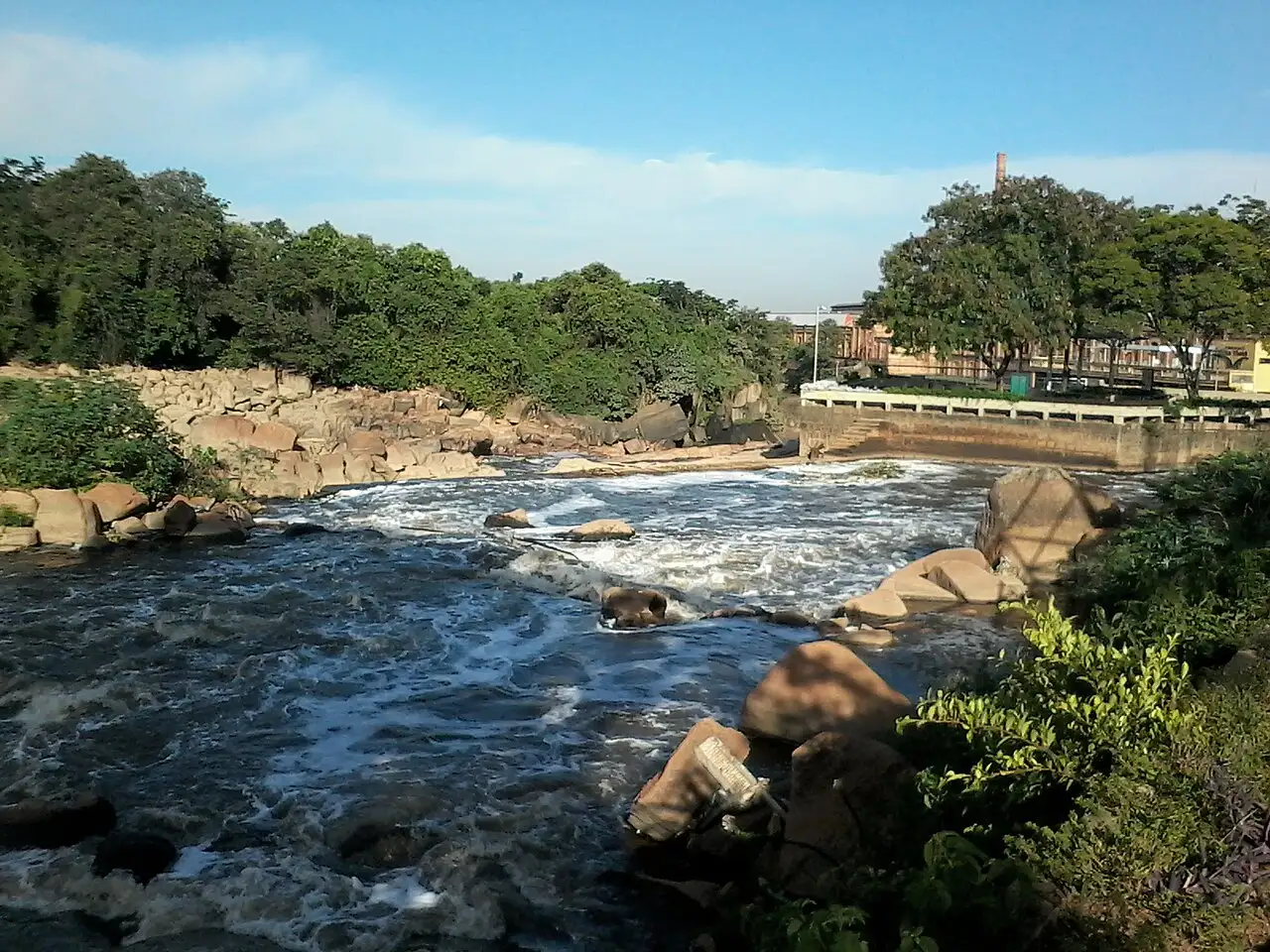

Salto was born beside the largest waterfall on the Tietê River and grew as a factory town. Today, with 134,319 residents in the 2022 Census in just 133.1 km², it is the most densely populated city in the Itu region, with more than a thousand residents per square kilometer. For those looking at the region, Salto offers full city life, a heritage tied to the river and quick access to the surrounding country gated communities.
History and profile
Its founding date is June 16, 1698, when the chapel built on the Cachoeira farm by Captain Antonio Vieira Tavares was blessed. In the 18th century, the Itu region served as a base for expeditions to the mines of Cuiabá, and in the first half of the 19th century the so-called sugar quadrilateral had more than a hundred sugar mills.
The railroad, in 1873, brought the first factories, and the textile industry gave Salto the nickname "Little Manchester of São Paulo". In 1919, the Júpiter and Fortuna factories gave rise to Brasital, whose complex of buildings now houses a university campus. With the Republic, Salto separated from Itu, became a municipality in 1889 and adopted its current name in 1917.
Italian immigration shaped the population in the early 20th century. The city has held the status of tourist resort (estância turística) since 1999 and is among the 29 municipalities in São Paulo state with this title.
Gated Communities and Neighborhoods
Salto concentrates urban residential gated communities with smaller lots, offering houses for full-time living close to shops and schools. In November 2026, a real estate portal listed about 2,800 houses in gated communities for sale in the city, from compact developments to communities of larger homes, such as Haras Paineiras.
For those who want a large lot, golf and an equestrian center, proximity to Itu puts Campos de Santo Antônio, Terras de São José I and Terras de São José II within reach. It is also possible to combine the two cities: live in an Itu gated community and use Salto's services, or the other way around.
Services and Shopping
Being more urban, Salto meets much of everyday life's needs within its own limits, with street retail downtown, supermarkets and banking services. Its proximity to Itu allows residents to split shopping and services between the two cities, and the Rodovia Santos Dumont makes it easy to reach Indaiatuba and Campinas.
Schools and higher education
Salto has a campus of the Instituto Federal de São Paulo (IFSP), with technical and undergraduate programs, two Senai units and the Centro Universitário Nossa Senhora do Patrocínio (CEUNSP), which in 2001 opened a campus in the former Brasital buildings. Faculdade Cidade de Salto has operated since 1998. For bilingual schools, it is also worth considering the options in Itu and Indaiatuba.
Health Care
The city has the Hospital Municipal Nossa Senhora do Monte Serrat, in Jardim Celani. For high-complexity care, the alternatives are in Itu, Sorocaba, Campinas and São Paulo, and its position between the Açúcar and Santos Dumont highways makes travel easier.
Leisure and culture
The city's signature landmark is the Tietê waterfall, which gives the city its name and was visited twice by Emperor Dom Pedro II. Around the falls, the Complexo Turístico brings together the Memorial do Rio Tietê, a museum dedicated to the river; the Ponte Pênsil, a suspension bridge built in 1913 to provide access to the old Canoas port and renovated in 1989; and the Caminho das Esculturas sculpture trail.
Parque de Lavras, covering about 140,000 m², occupies the site of a 1906 hydroelectric plant and features a sundial and a bromeliad garden. Parque da Rocha Moutonnée, covering 43,338 m², preserves a pink granite estimated to be 500 million years old and was listed as heritage by Condephaat in 1990. At the top of the city, the Monumento à Padroeira, honoring Nossa Senhora do Monte Serrat, stands 30 meters tall, and the Igreja Matriz, from 1936, occupies the site of the 1698 chapel.
Access and distances
Salto is about 100 km from São Paulo. The city is served by the Rodovia do Açúcar (SP-308) and the Rodovia Santos Dumont (SP-75), which links it to Indaiatuba, Campinas and Sorocaba, and it borders Itu, from where the Castello Branco can be reached.
The real estate market
Salto's market is mostly for full-time living: houses in urban gated communities, townhouses and apartments, with a wide supply. For those seeking the country lifestyle, the alternative is the neighboring gated communities of Itu, where, in November 2026, houses listed at Campos de Santo Antônio II ranged from about R$ 2.7 million to R$ 7.9 million. Before closing a deal, it is worth comparing the HOA fee, lot size and daily commute to work.
Grando serves Salto and the Itu region with local partners and can help you compare neighborhoods and gated communities and handle the negotiation.
More in Cities
Sources consulted (5)
- IBGE - 2022 Demographic Census, table 4714 of SIDRA (population, area and density) (apisidra.ibge.gov.br)
- Salto (São Paulo) - Wikipedia (history, schools, attractions and coordinates) (pt.wikipedia.org)
- Nature and industrialization are part of Salto's history (Legislative Assembly of São Paulo) (al.sp.gov.br)
- Gated-community houses for sale in Salto (listing portal, Nov. 2026) (chavesnamao.com.br)
- Campos de Santo Antônio II, Itu (community page and listings, Nov. 2026) (lmartinelli.com.br)
Information verified on 01/11/2026. Found something outdated? Let our team know.